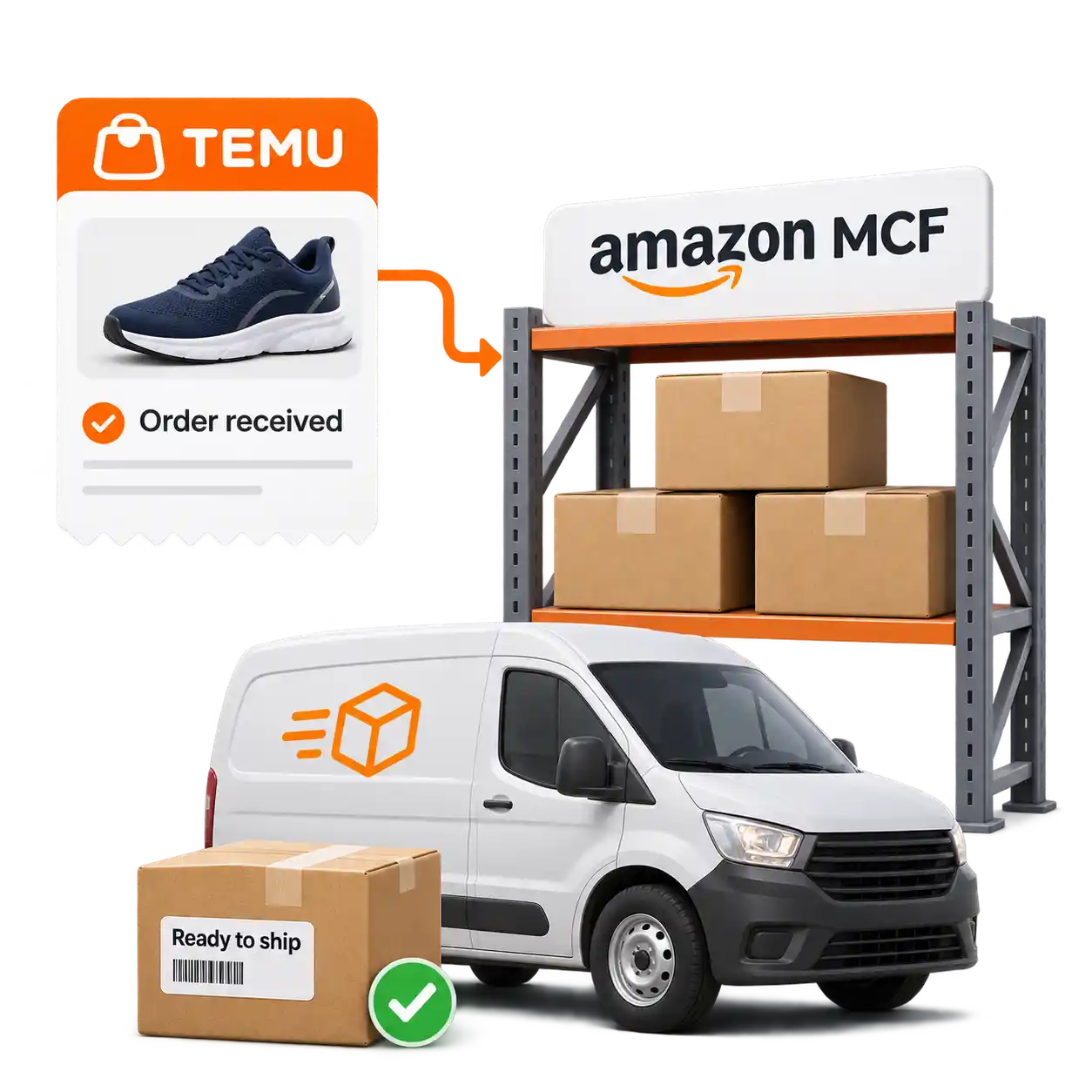
Have you ever thought that by using your current FBA inventory, sellers can sell on Temu without investing in additional warehouse space? Scaling to a new marketplace involves more than just listing products, but it requires a reliable strategy for managing inventory, data, & order fulfillment across multiple sales channels. By using Temu Amazon MCF integration, sellers can fulfill Temu orders with inventory kept in Amazon’s fulfillment network, without rebuilding everything from scratch.
This blog will explore the key workflow, Temu's seller models, why Amazon MCF works for Temu orders, and much more. The objective is to make a more seamless multi-channel operation that helps sellers scale their reach while making correct use of their current inventory and resources.
WWhy Are Brands Adding Temu as a Sales Channel?
Brands and SMEs (Small and Medium Enterprises) are mainly adding Temu as a sales channel to move into vast global traffic, reduce their acquisition cost, and expand operations with less upfront risk.
Key reasons brands are joining Temu:
- Massive User Traffic & Reach: Temu is rated among the most visited onlinemarketplaces globally. Listing on this platform allows brands to engage millions ofactive shoppers without building it from scratch.
- Low Advertising & Marketing Burden: Traditional marketplaces compel brands to spendhuge amounts on paid ads just to get more visibility. But Temu relies on its broad marketing &discovery-based shopping experience to display products to shoppers.
- Fulfillment & Logistics Flexibility: Regional sellers can manage domestic fulfillment byusing their own networks or use Temu's carrier network to simplify shipping.
- Expansion into International Markets: Brands that use Temu for selling their productsfind it easy to expand and fulfill orders globally.
Temu's Seller Models and What They Mean for Fulfillment
Choosing the ideal seller model on Temu is an important operational decision. Temu majorlyoffers 3 main models: Seller-managed fulfillment, Temu-managed, or 3PL fulfillment.
1. Seller-managed fulfillment
In this model, sellers keep and handle order processing, picking, and shipping as per Temu'srelevant requirements. Also, they can use their own warehouse.
What it means: More control over stock and shipping, but complete responsibility for orderaccuracy and meeting delivery timelines.
2. Temu-managed or platform-supported fulfillment
Under this program, Temu manages the complete supply chain by handling shippingarrangements, core fulfillment services, and organizing final delivery.What it means: Less operational difficulty for the seller, but reduced control over theshipping process.
Under this program, Temu manages the complete supply chain by handling shipping arrangements, core fulfillment services, and organizing final delivery.
What it means: Having less operational difficulty for the seller, but reducing control over the shipping process.
3. 3PL fulfillment
Within this model, sellers outsource their order fulfillment process from picking to shipping to a 3rd-party provider.
What it signifies: They outsource their warehouse work while holding control over maintainingservice costs and inventory availability.
Related Read: Looking for more ways to simplify Temu order fulfillment? Explore our guide on How to Streamline Temu Order Fulfillment with 3PL Integration to discover how third-party logistics can help automate shipping and order management.
Why Amazon MCF Works for Temu Orders?
MCF works for Temu orders by letting Temu US sellers use their current FBA inventory toautomatically pack and ship items sold on Temu's US semi- or local managed model.
Why the integration works:
- Automated Middleware Sync: Integration apps like MapMyChannel connect Temu &Amazon MCF to sync inventory, orders, and tracking numbers in real time.
- Unified Inventory Pool: Sellers keep their stock in Amazon fulfillment centers once, andafter that, Amazon uses that inventory to fulfill orders globally with no separatewarehouse.
- US Local / Semi-Managed Model Compatibility: It operates mainly when you work onTemu's regional seller model, despite being a fully managed model.
- Fast Delivery & Tracking: It uses Amazon's logistics network to provide reliable 2- to 3-daydelivery speeds and automated tracking updates that meet Temu's rigid platformtimelines.
How the Temu → Amazon MCF Workflow Runs
The Temu and Amazon MCF integration workflow automates inventory, order, and tracking sync among your store & Amazon’s fulfillment center using a 3rd-party connector.
Step-by-step workflow for Temu Order Fulfilment with MCF
1. Customer Places an Order on Temu
A shopper buys a product in your Temu store. The transaction is listed within your Temu sellera/c.
2. Integration Platform Captures the Order
- A middleware connector like the MapMyChannel app finds the new Temu order in real time.
- The platform verifies core order data, involving SKUs, shopper's name, quantities, &shipping addresses.
3. Order Routed to Amazon MCF
- The integration tool shifts the order info to Amazon MCF.
- Amazon evaluates your shared FBA inventory pool.
4. Amazon Picks, Packs, and Ships
- Amazon will pick and ship the order through Amazon’s logistics network or affiliatedcarriers.
5. Tracking and Inventory Sync Back
- The shipping date, carrier name, & tracking number will automatically be sent back toyour Temu dashboard.
- Stock counts are automatically updated in real time across Amazon & Temu to avoidstockout situations.
Watch our step-by-step tutorial: How to Integrate Temu with Amazon MCF Using MapMyChannel and learn how to connect both platforms and automate your fulfillment workflow in minutes.
Inventory Sync to Avoid Overselling on Temu
To prevent overselling, sellers should use real time inventory sync that will automatically update the stock counts when an item is sold on different channels.
- SKU Mapping: Make sure unique identifiers map across Temu and your store to avoid uneven product matching & sync failures.
- Centralized Inventory: Use integration software to work as a single source of truth. When a product sells on Shopify, Temu, or Amazon, the platform immediately updates stock across all network channels.
- Inventory Buffer Strategy: Keep buffer stock or a low-stock gateway in your app for sudden multi channel surges before an out-of-stock log.
Common Setup Mistakes to Avoid
Avoid these setup mistakes when selling on Temu fulfilled with Amazon MCF:
- Choosing the Wrong Product Category: Selecting the wrong categorization can affectTemu's search algorithm and can create visibility issues.
- Poor Product Photography: Using poor-quality images can affect CVR, as Temu reliesparticularly on eye-catching thumbnails to increase clicks.
- Mismatched Legal & Bank Information: Providing business names, payout bank a/c, ortax IDs that don't match your official documents.
- Uploading an Entire Catalog at Once: This will increase the risk and often result inoperational delays and wasted capital.
Automating Temu Order Fulfillment with WebBee
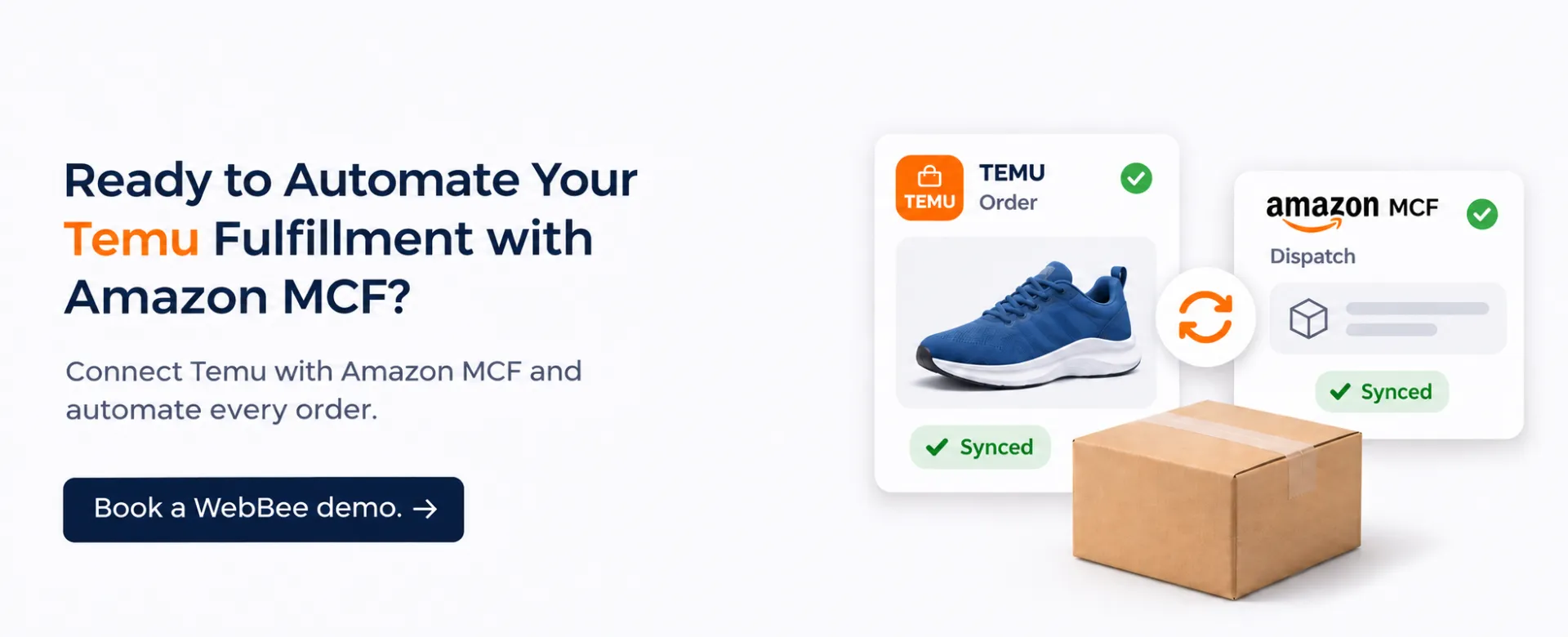
Automating Temu order fulfillment with WebBee is managed via its MapMyChannel app, which integrates your marketplace store directly with fulfillment partners like Amazon MCF, ERP, or 3PLs.
Core capabilities:
- Real-Time Inventory Sync: Avoid stockouts by keeping stock levels updatedautomatically across Temu and your FBA inventory.
- Automated Order Processing: Navigates new Temu orders directly to your fulfillmentpartner without any manual interference.
- SKU & Bundle Mapping: Supports virtual bundling, combo items, and multi-locationinventory sync.
- Tracking & Status Updates: Automatically shifts shipping labels, delivery status, andtracking numbers to Temu.

Conclusion
Both Temu and Amazon are platforms that have huge potential in their respective areas.E-commerce sellers can smoothly optimize their operations by integrating them. To increase the benefits of this Temu-Amazon MCF integration, it is best for sellers to connect these platforms using the MapMychannel app. It is easy to set up and has functionalities that automate your order process for quick and accurate fulfillment.