

eBay Return Policy: The eBay Seller’s Guide for 2026
WB
WebBee Team
eCommerce Specialists
Be with us as we dive into the ins & outs of eBay return policies. In this blog, we will discover how eBay shapes the changing e-commerce ecosystem in the marketplace and how to make an eBay return policy that works best for your business.
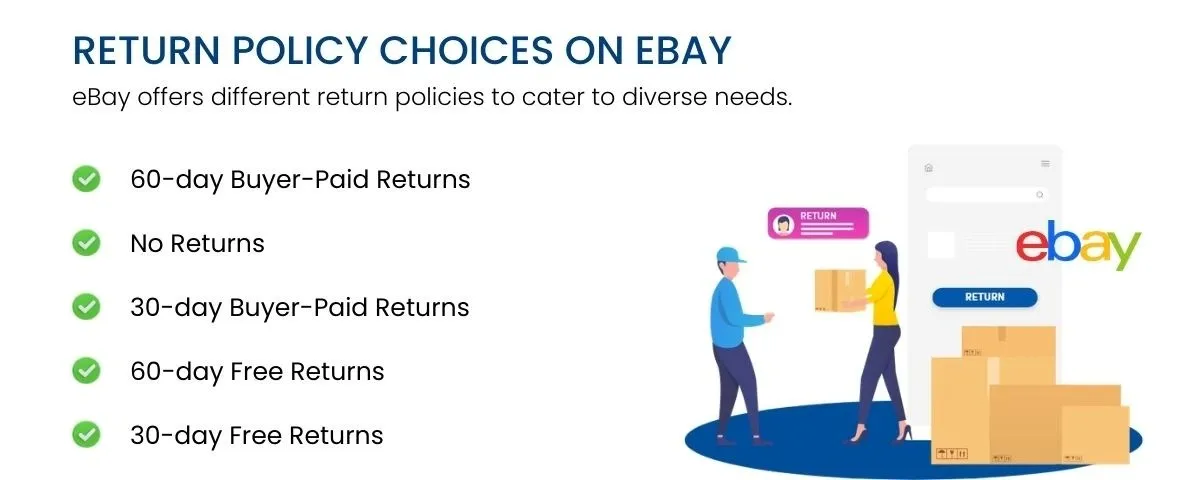
eBay's return policy is a section of the well-established eBay business policies that provides several options for sellers & buyers. Seller can choose from different return options, including No return accepted. But eBay offers more budget-friendly options for users, like its 14-day return policy and 30-day return, or 60-day return business-day return window. Also, sellers can go for free returns, certainly boosting sales by a notable range, anywhere between 5%-25%.
From a buyer's perspective, eBay aims to offer a worry-free shopping experience. It means that once you start offering more friendly return policies, such as eBay's 30-day return policy, you will experience an increase in sales, which will ultimately boost your ROI.
When buyers begin return requests, the eBay return strategy enables sellers to build rules for fast returns & refunds. eBay's return plan focuses on the significance of managing buyer & seller convenience.
Starting returns on eBay consist of a collective effort between sellers and buyers. It encourages clear communication. When you are selling on eBay, you need to define your return policy, specifying the conditions under which returns are not allowed. These conditions include details such as return shipping costs and the period during which returns are accepted post-sale.
Crafting a well-designed return policy is essential. Handling return requests immediately improves the shopping experience, providing efficient proposals. For sellers who accept requests, automated regulations can streamline the process of managing return requests. eBay return policy for sellers caters to several purposes, involving:
Automatic Acceptance of Returns
You can automatically confirm unique return requests while keeping the flexibility to manage others manually. This automation provides personalized, efficient care when needed.
Issuing Refunds & Item Retention
In cases where return shipping costs exceed the product value, the automated policy can offer an instant full or partial refund with the option to keep the product. This strategy increases efficiency and improves the shopping experience for buyers.
Distinct Return Addresses
Rule-Based Automation lets you set different return addresses for other items. This will be useful for various kinds of products or locations.
Why integrating eBay and Amazon Beneficial for E-commerce Sellers?
It offers complete coverage for a broader range of eBay transactions, ensuring buyers' rights in the event of any issues. This policy protects users' interests by allowing them to seek a refund if the product they receive does not meet the specified criteria.
Let’s look at the breakdown of the eBay Money Back Guarantee policy, covering its eligibility conditions, scope, & key exclusions.
The eBay Money Back Guarantee is relevant in the following situations.
Sellers handle transactions covered by the eBay money-back guarantee.
If a buyer outlines non-delivery and caters eligibility criteria, eBay looks into it by looking at the following points:
To build on-time delivery, eBay needs the following details:
In scenarios where sellers provide global shipping or don’t eliminate international choices.
Efficient return request management is important for a successful eBay selling experience. You can build rule-based automation for return approval or immediate refunds to leverage this process & save time. When listing orders, you must showcase your return policy & conditions, including return shipping costs & the timeframe for the return window on eBay. But it is essential to clarify things and ensure your eBay return policy is written in your listings.
For tailored automation, eBay allows the creation of advanced return rules:
The online marketplace sector is generally rife with myths, and eBay is no exception. Let’s explore common myths about eBay returns & provide facts.
Fact: While eBay offers sellers with tools &guidelines for smooth returns, the returns control lies with individual sellers. The sellers need to initiate refunds, address issues, and process returns.
Fact: A significant myth is the belief that eBay forces a structured, multi-purpose return policy for every seller. Each eBay seller likes the option to set their own return terms. This converts to diverse return policies across vendors.
Fact: Sellers can create unique return policies for the product categories they list. This allows for delicate returns management. Like, sellers can set a boundary, return windows, or unique terms for fashion, collectables, or electronics.
In the changing landscape of eBay transactions, two core factors that can make a big difference are making buyers satisfied and communicating clearly as eBay's return policy does not require anyone to follow similar rules. Each seller's return policy shows how committed they are to offering high-quality service while understanding the varied products they sell.
Sellers can enhance their items by being clear about their return policies and using automated tools to manage certain aspects of the return process. Primarily, making clear rules with smart automation is the same as creating a masterpiece.


.svg)