

A Guide to Amazon Seller Performance Metrics in 2026
WB
WebBee Team
eCommerce Specialists
When you verify your Seller Central account, you will look at multiple Amazon seller performance metrics such as LSR, CR, ODR, and more. These metrics are not only just random figures, they directly influence your capability to sell on Amazon. Bad performance can result in low search rankings, account suspension, or even restrictions.
And many sellers didn’t realize how vital these numbers are until they faced a problem. So, when they think of taking action, their accounts are already at risk. That’s why this blog will help you to know about Amazon seller performance metrics. We will explore what they are, what core metrics you need to look at, and how you can monitor them. Let’s dive in!
It measures how precisely an a/c fulfills orders and treats users, things such as cancellations, late shipments, and complaints. Amazon utilizes them to assess profile credibility, and a constant decline can result in warnings or temporary delay. Sellers, marketplace managers, and agencies, monitor them regularly to find out problems instantly, before they impact selling privileges.
Amazon offers seller metrics to offer insight into account condition, user satisfaction, and sales performance. That’s why monitoring amazon seller metrics is vital:
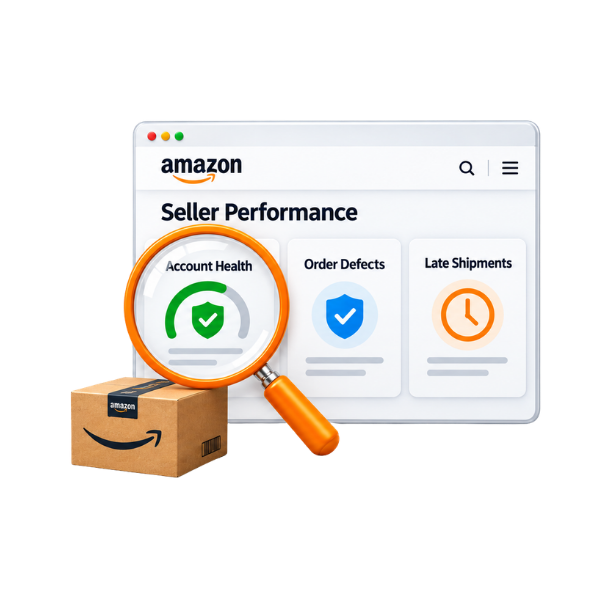
The Amazon ODR evaluates how well a seller manages user satisfaction. Amazon needs sellers to keep this below 1%. A high ODR can result in account suspension.
It includes:
LSR tracks the % of orders that are shipped after their anticipated delivery date. Timely shipping is vital for managing strong performance metrics and meeting Amazon’s benchmarks. Sellers must keep their LSR below 4% by leveraging fulfillment processes and utilizing reliable shipping partners.
VTR examines the percentage of shipments that involve qualified tracking numbers. Amazon needs sellers to manage a VTR more than 95% so users can track their orders quickly.
It evaluates the % of orders canceled before they are completed. A rate over 2.5% can negatively influence a seller’s a/c and entire performance on Amazon.
OTDR tracks the orders that are received by the said date. Amazon sets more expectations for this metric to manage a positive user experience.
IPI examines how well sellers handle inventory. A high IPI score (over 400) makes sure better storage limits and prevents surplus storage fees.
It considers:
Any SKU sitting between 85% to 92% is at danger of dipping below the line at the time of Q4 volume.
Read more: Amazon Launches 1-Hour Delivery: What Sellers Need to Know.
Tracking ad performance assists sellers to receive best value from their ad spend. Core metrics to monitor involve:
The % of ad clicks that steer to purchases. A high conversion rate showcases efficient product listings.
This displays how frequent users tap on the ad after looking at it. A high rate shows that your ad is suitable to your users.
It is the average cost of every tap on the ad. A drop CPC refers to a more affordable campaign.
The opposite of ACoS, highlighting how much profit is created per dollar paid on ads.
Evaluates ad spend relation to total revenue, involving organic and PPC sales.
💡 Pro Tip: Create a daily checklist to review these metrics consistently. Early detection of issues can prevent serious account health problems.
Offering quick, helpful, and expert customer service enhances buyer satisfaction and trust. Tackling inquiries fastly, resolving complaints efficiently, and providing proactive support avoid issues from getting into conflicts or negative feedback.
Maintaining the correct inventory levels avoids stockouts and sudden cancellations. Regular stock audits, demand prediction, and utilizing Amazon’s restock suggestions help seamless fulfillment.
Shipping orders timely with trustable integration partners like WebBee ensures users receive their orders as anticipated. Automating fulfillment workflows, constantly verifying carrier performance can lessen delays.
Proper listings with actual images, suitable keywords, and detailed descriptions, engage more users and enhance CVR. Daily updating listings depend on user feedback and market trends improve visibility and reliability.
Consistently evaluating Amazon Seller Central dashboard assists identifying new trends, pinpoints issues early, and takes right decisions before they affect performance.
Spotlight: Business Hour Delivery Rate Just Became a Real Threat
A clear understanding of Amazon seller performance metrics is vital for handling account health and driving long-term growth. By monitoring and optimizing core metrics such as order defect rate, inventory performance, and late shipment rate, sellers can prevent penalties and enhance their entire sales performance.
Verify your metrics on a multi-level schedule: daily or weekly for urgent, short-term health, monthly for business trends, and quarterly or annually for long-term approach.
Amazon needs sellers to keep this below 1%. A high ODR can result in account suspension.
Yes, listing quality immediately influences your seller metrics. Badly managing listings increases return rates, less conversion, and drives negative reviews.
.svg)