If you are thinking about where to sellvintage clothing, the right platform is based on what you are selling, how much you will be involved in the process, & how much stock you have. An easy-going seller getting rid of a few items will require a very varied channel from a reseller with weekly falls or a vintage shop wanting to develop a brand. Picking the wrong platform can result in less margins, lower sales, & most of the time spent listing in the incorrect place.
This blog helps you select the right place to sell vintage clothes depending on your business size, inventory, selling style, & price point, so you can determine faster and begin selling with better confidence.
Why is Vintage Clothing Worth Selling?
It is not only about streamlining your closet. The re-commerce company is expanding much more quickly than the traditional one. Mainly, Gen Z generations are actively looking for sustainable choices to quick fashion. They desire unique pieces with a story, and for that, they are ready to pay even higher prices.
This makes an ideal place for sellers. You can:
Encourage Sustainability: You are a core player in circular conservation, offering top-quality garments.
Establish a Brand: Not only act as a reseller, but you are a keeper. Your taste & style matter a lot for your brand.
Enjoy High ROI: Not like typical retail, your COGS can be very low. A $5 estate sale item can be removed, styled, & sold for $150 to the correct buyer.
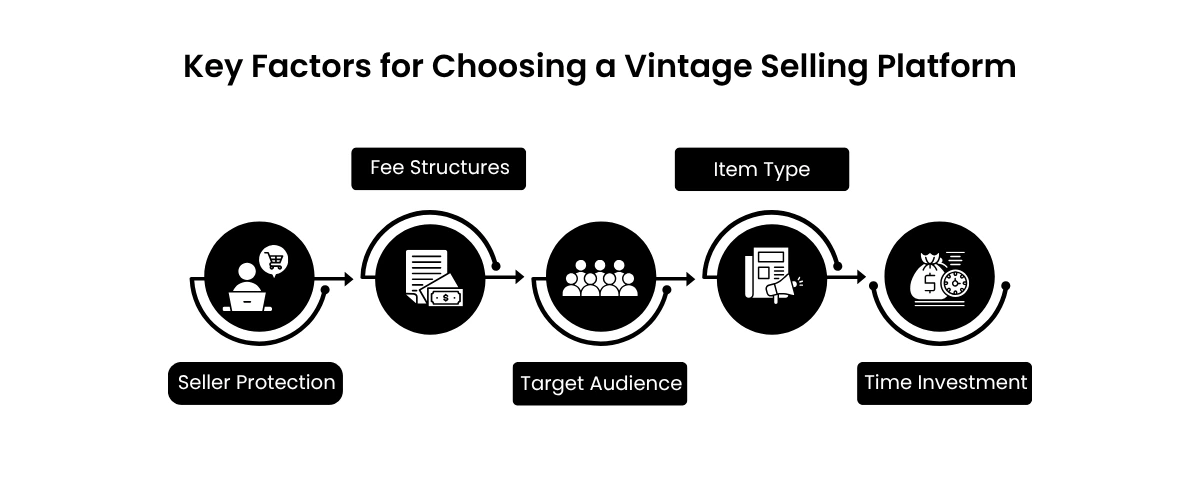
Seller Protection: Review every platform's regulations on disputes, fraud protection, & returns, to protect your business.
Fee Structures: Know commission rates, payment processing charges, listing fees, & shipping costs to evaluate your actual ROI.
Target Audience: Varied platforms engage different demographics. Like, a vintage band short will work best on Depop rather than on a premium consignment site.
Item Type: Your clothing kind, fast fashion, handmade, luxury designer, vintage, will majorly impact which platform provides the best results.
Time Investment: Look whether you wish for manual operation with single listings or go for the convenience of consignment services that manage everything.
Top Platforms: Selling Vintage Clothing Online in 2026
Sell Your Vintage Finds: Top 7 Platforms You Need to Know
Let’s explore where to sell clothing on different platforms.
1. eBay
It is still one of the right answers to the question of where you can sell vintage clothing if you look for the widest possible reach. eBay operates mainly well when your stock spans varied eras, price points, & styles. What makes it valuable is its flexibility. You can utilize fixed pricing for daily vintage or auction formats for non-marketable items that may engage collectors.
Ideal For
Global buyers
Rare or collectible fashion items
Vintage clothing & accessories
Designer & luxury items
Pros
Global shipping infrastructure
Massive international audience with more than 182 million active users
Strong seller tools & analytics
An auction format can lead to higher prices for desirable products.
Cons
A more competitive marketplace needs strategic pricing.
A tough fee structure can slow down your profits.
User service responsibilities fall on sellers.
Listing optimization needs time & effort.
Fees Structure
Starting fees: $0.35 per listing
Final value fees: 12.9% on total sale price (involving shipping) up to $7,500
The short video format is superb for displaying vintage clothing in fun & creative ways.
Cons
Its audience tends to concentrate on quick trends despite curated vintage items.
needs similar creative content & video editing knowledge.
Fees Structure
No listing fees
2.18% transaction fee
6% referral fee on sales
6. Depop
This app has become the shopping center for Gen Z & millennial trendsetters, showcasing an Instagram-kind interface that focuses on visual appeal & specific style.
Right for
Unique, unparalleled pieces
Vintage & Y2K fashion
Streetwear & urban styles
Pros
Instagram-type interface, Visual good for fashion
Robust community culture & trend awareness
Global selling capabilities
Cons
Needs constant posting & engagement
10% selling fee and payment processing charges
High competition with a focus on aesthetic presentation
Fee Structure
10% commission on every sale
Payment processing fees
Shipping costs managed by the seller
7. Instagram
Its integrated shopping characteristics enable sellers to tag products directly in posts & stories, making a smooth shopping experience within the application.
Right For
Trendy & photogenic clothing pieces
Visual brands with robust aesthetic identity
Influencers & content creators
Pros
Direct engagement with the right users
Utilizing current Instagram following
Highly visual platform ideal for fashion
Cons
Should connect to a qualified e-commerce platform
Needs business account & approval
Rely on the Instagram algorithm for visibility
Fee Structure
Free to use
Fees based on related e-commerce platform
Final Decision
Selling vintage clothing online unlocks a lot of possibilities to interact with buyers who embrace a unique & sustainable lifestyle. We have explored the top platforms for where you can sell vintage clothing, from eBay’s international marketplace to Depop’s visual & trend-based audience. Apart from these, there are other several options involving Etsy, Poshmark, Vinted, Facebook, & more.
To streamline your operations, manage listings effectively, & automate workflows over platforms, you can connect with WebBee Integrations experts, who specialize in assisting online sellers scale their brand with ease.
In order to provide a more relevant experience for you, we use cookies to enable some website functionality. For more information, please review our Privacy Policy.
✦ TikTok Shop sellers:
35% off Amazon MCF fulfillment rates for 12 months!
Available for eligible TikTok Shop orders in the US, EU, and UK, with the promotion applied automatically to orders from WebBee.
3 Months FREE SetupOffer valid until 30th October — don't miss it
New Users Only
Wait! Don't Miss Your Free Growth Pass
Unlock 60 Days of FREE Access
Get full access to all WebBee apps for 60 days at zero cost. See how it works with a quick demo and claim your exclusive offer before you leave.




.svg)