

E-commerce Marketplace Integration: Benefits, Challenges & How to Choose the Right Solution
WB
WebBee Team
eCommerce Specialists
In today's rapid-paced e-commerce environment, brands and 3PL vendors are required to integrate with multiple marketplaces to reach a broader audience to boost sales. But, handling multiple marketplaces can simply become exhausting without ecommerce integration. That's where e-commerce marketplace integrations come into the play. It's not only a tech update, but a business approach that assists you to expand efficiently.
Whether you are just starting or searching to scale your business online, this blog will explore the benefits, importance, challenges, and how you can choose the best ecommerce marketplace integration for your business in 2026.
The process of connecting a brand’s online store to 3rd-party marketplaces such as Etsy, Amazon, eBay, and more using ecommerce APIs. Also, automatically syncs orders, product listings, and inventory, supporting sellers to handle all sales channels from a single platform despite updating them manually.
Here is what ecommerce integration can do:
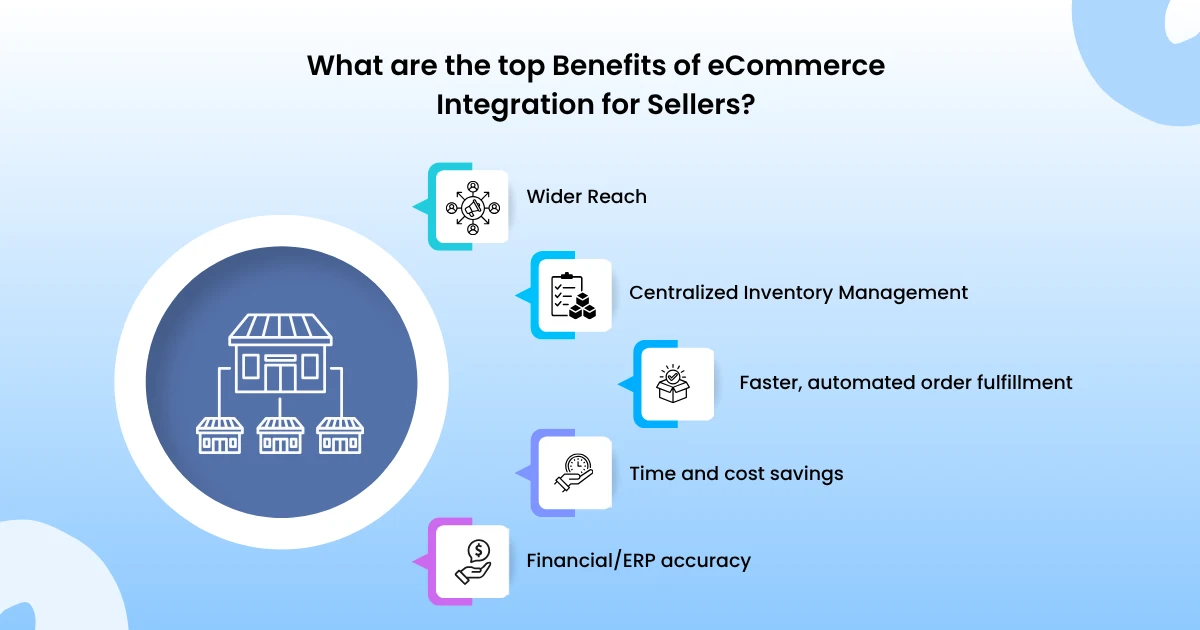
Automating data flow which stops teams making major mistakes at the time of order processing. It saves you from repetitive entry and sellers can focus on business growth.
Real time inventory sync updates your product count over each selling platform the moment a sale occurs. This holds you from cancelling orders or frustrating shoppers when products sell out.
Orders flow immediately into your central shipping central dashboard for instant packing and labeling. Fast processing reduces fulfillment delays and shoppers get their orders in the given timeline.
You can connect new marketplaces and manage hundreds of orders without additional staff. The ecommerce marketplace integration software handles the complex operational tasks, by not increasing your operational costs when sales grow globally.
Shoppers get accurate order info, immediate tracking numbers, and on-time deliveries updates. Consistent, reliable service builds brand strong loyalty and avoids negative reviews.
When the same product is sold over multiple platforms, inventory can quickly become inaccurate if stock counts are not updated automatically. This can lead to overselling, unhappy customers, and canceled orders.
Each online platform uses their own specific product types, rules, and labeling standards. Converting these diverse data into a single centralized dashboard needs a tough, error-prone set up.
Delay in updating prices, inventory, stock levels, and order status over multi channels can create huge operational dead spots. Not able to sync these details immediately results in errors and inconsistent buyer experiences.
Handling fulfillment when orders flow in from multiple channels with specific shipping timelines is tough. Organizing delivery tracking and routing orders to the right warehouses needs a highly advanced setup.
Every channel has unique listing fees, commission rates, seller guidelines, and return policies. Keeping monitoring these rules is complex and can affect your profit margins.
Selecting the top marketplace integrator needs aligning your existing software setup with your long-term sales objectives. Let’s explore how to assess and implement the right ecommerce marketplace integration software for your organization.
Choosing a platform with in-built connectors avoids costly development and enables seamless updates.
Find out whether your e-commerce platform, ERP, or the integrator itself will keep your inventory and product data. Determining a single source of truth avoids inventory sync issues and stops you from overselling over multiple channels.
Choose an integrator that provides structured onboarding support and actual documentation to advise your tech team.
Check that the integrator moves order data immediately to your warehouse management system, shipping carriers, or 3PL. Smooth compatibility makes sure that tracking numbers and fulfillment status sync back to the user automatically with no manual entry.
Link your marketplace developer a/c in a preparing environment to run tests on inventory and order updates. Deep testing enables you to find out sync errors or delays before launching it to live buyers.
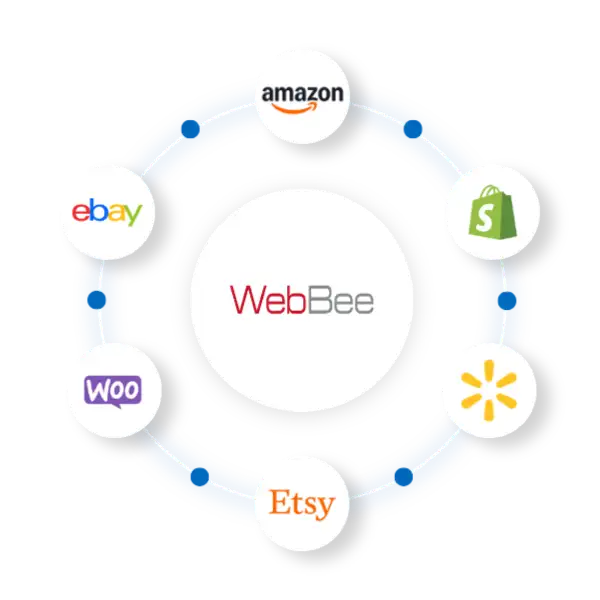
Let’s see how WebBee particularly handles multi-channel marketplace integration such as TikTok Shop, Amazon, Walmart, Etsy, and more.
As your business expands, operations get more difficult to manage. Marketplace Integration Solutions help you to streamline store operations , automate smoothly, and encourage your growth journey. Don’t settle for multitasking spreadsheets, but invest in integration that supports you to think bigger.
Ecommerce integration connects your sales channels, inventory software, and warehouse systems, avoids overselling and out of stock by using real time data sync. Where sellers can manage multiple operations with a single dashboard using real time inventory sync, buffer stock.
Yes, you can simply integrate multiple marketplaces using a MapMyChannel by webbee, which helps ecommerce sellers to manage inventory & order fulfillment in real time.
Yes, marketplace integrations can smoothly connect with your ERP or accounting software. This connection will automatically sync inventory levels, invoices, sales orders, and customer details.
.svg)