

WebBee Empowering Sellers Through eCommerce API Integration
WB
WebBee Team
eCommerce Specialists
Think of manufacturing a product with just a single machine? Sounds impossible? E-commerce involves many operations that are different yet dependent on each other, as they involve data exchange. For this, they need efficient APIs that can transfer and process information for smooth operations. In this blog, we will discuss many aspects of eCommerce API integrations so that you can also utilize them effectively to enhance your online sales.
An API is an Application Programming Interface, which helps applications communicate with each other. If any software or application initiates a process that requires data collection or utilizes the functionality of another application, this built-in interface helps it do the same. If we look at the general categorization of APIs, they are basically of three types:
Since it can be a bit technical term for many online sellers, it might be difficult for them to understand how it works. Let us break this down and go through this picture:
The process begins with triggering a request to the API. This command can be in any form, such as a payment or a message.
This request is now sent to the API server for processing.
This step includes the following processes:
The API receives information in an encoded form for the initial request sent.
Finally, the client gets an appropriate result in a readable format displayed on the application.
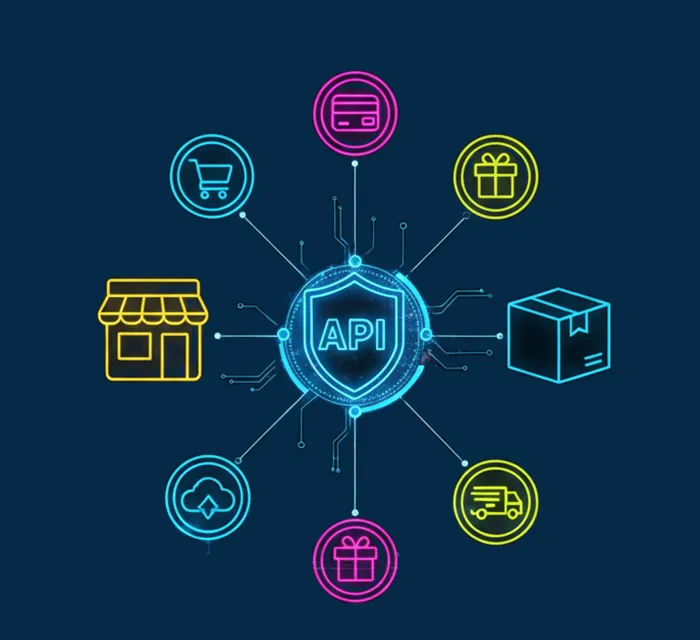
E-commerce processes are required to exchange data between various applications and software. Therefore, it is important to integrate the e-commerce platforms with external software that gathers relevant information, known as e-commerce API integration. It has many types, but here are the major API integrations commonly used in eCommerce arena.
Inventory Management Systems - This collects data about the number of products left in the warehouse and displays the same on the sales channel.
Order Management Software - This pulls the data of orders placed on the e-commerce platform, such as the customer name, address, quantity ordered, etc.
Shipping Carriers Integration - Sellers can connect with multiple 3PLs, and this integration helps collect data on the order status and tracking number.
Payment Gateways - Buyers pay through online mode; therefore, payment gateways are integrated to make the payment process easier.
Customer Relationship Management Software - Customer data is important to collect so that they can be served better.
The API integration connects the eCommerce applications with various other software to carry out the operations smoothly.
E-commerce API integration can be of many types, depending on the operation it caters to. Let's have a look at a few of them-
This acts as a bridge between the frontend and backend of any e-commerce application. It fetches data from the backend of the store and makes the frontend more interactive and appealing.
Want to utilize a sales channel for your e-commerce business? This API helps you connect with marketplaces such as Amazon, Shopify, TikTok Shop, and many others. You can even connect with various sales channels and leverage multi-channel selling.
The e-commerce industry highlights the significance of payments in online retailing. Digital sellers often require APIs that can connect their channel with payment gateways. Most of the shoppers today make online payments for their digital purchases. Hence, integrating payment channels is a good strategy for the sellers.
Another important process in online commerce is shipping products to the customers. It involves real-time sync of order location, so it is easier to track. Shipping APIs help e-commerce sellers collect the real-time data of orders and provide access to the same to the shoppers. Merchants can even connect various third-party logistics providers using 3PL APIs for order shipment.
If finances and business management keep you worried, you can actually put an end to all of them! How? By integrating accounting and ERP APIs with your e-commerce business. These APIs help you sync data between ERP and store, which can be used for various operations such as finances, supply chain, CRM, and others.
Note: If we go with the previous classification, all these e-commerce APIs will fall into the category of Open API integration.
Couldn't grasp yet? Need not worry! Let's try to understand these API integrations through a use case.
.webp)
The biggest USP of eCommerce APIs lies in their dynamic and flexible nature. It can be customized to meet the varying requirements of online merchants. The role of APIs is becoming more prominent as technology is expanding. They are helping sellers to streamline and enhance their operations, including stocks, orders, prices, and even customer experience. How? By implementing the following technologies:
A. Automation
B. Artificial Intelligence,
C. Augmented Reality,
D. Virtual Reality, and many others
Hence, APIs help online sellers become future-ready by leveraging technology and scaling efficiently.
We have understood the relevance of APIs in general at present, but what makes them so important for e-Commerce? Actually, digital commerce comprises various operations that require communication with several applications and software. Consider a situation where a seller has a certain number of items in the inventory, and this data is updated in real-time in the ERP software. Now, the issue here is, how will this data be updated on the website? This is where eCommerce API integration comes into the picture! Inventory management is just one case; there are many others, such as custom integration, product listing, dynamic pricing, or personalization, that require data exchange. Therefore, API integration is a must-have for online sellers. Many retailers think that these are available only for prominent sales channels, but an interesting point is that they are accessible for even personal eCommerce websites. Yes! We are discussing custom APIs - developed only to cater to your business requirements.
But is there a simple way to utilize them, and what are the options available to the sellers? Let’s see in the next section.
We know a lot of sellers do not have a technical background, and they might find it difficult to implement APIs.
Should this limit your business expansion? No! Should you execute a zero-code API solution? Yes!
WebBee provides API integration for eCommerce stores and acknowledges the need of such sellers and therefore, offers the zero-code API implementation. The best part is that you can utilize them even for your own website and make ecommerce operations efficient. Wondering how you can do this? It just takes five simple steps:
That’s it! No coding involved - It is as simple as using a social media application. You can contact us or book a meeting to learn more about our API solutions. Let's continue gaining more knowledge about the world of APIs, as of now!
Though each API can have a unique use case, here we will discuss all the above-mentioned APIs through one example. This will help you understand the bigger picture of open e-commerce API integration and see how all of them work together to make operations smoother. Suppose a shopper visits your website and finds a pair of sneakers. Thanks to the Storefront API, that makes the product images are so appealing that he decides to buy them instantly. However, for some reason, probably financial issues, he decides to buy it through Amazon, and luckily, he finds your product listed there, as you have already utilized the marketplace API integration. He gets an amazing offer there and proceeds to buy the product. This time, the credit goes to the payment gateways API that makes the online transaction possible. What next? The order is set to be delivered with any 3PL, which can be done through shipping and 3PL API integration. Thinking about the backend operations? ERP API integration helps businesses manage inventory and orders. The accounting API keeps track of all the financial transactions.
Simple! We hope it's now clear to you how all these e-commerce APIs come together and streamline the operations. Moving forward, everything comes with certain flaws and open APIs are no different. Let's have a quick look at the issues sellers may face with e-commerce API integration.
This is a major issue for many online retailers as API integration can be a bit complicated for them. But you need not worry! MapMyChannel by WebBee makes open API integrations easier. So you can utilize it for simplifying the API implementation.
We all have several applications on our phones, and we get their updates from time to time. Similarly, e-commerce APIs also get updates to improve their functionalities. This can be a bit problematic for not-so-tech-friendly sellers, but if they really want to upgrade their operations, they must take this challenge positively.
Downtime is a major issue for many sellers. It may occur a few times since APIs use a server to fetch data, which can reduce the speed of e-commerce operations, such as shipping and payments. This results in the following issues-
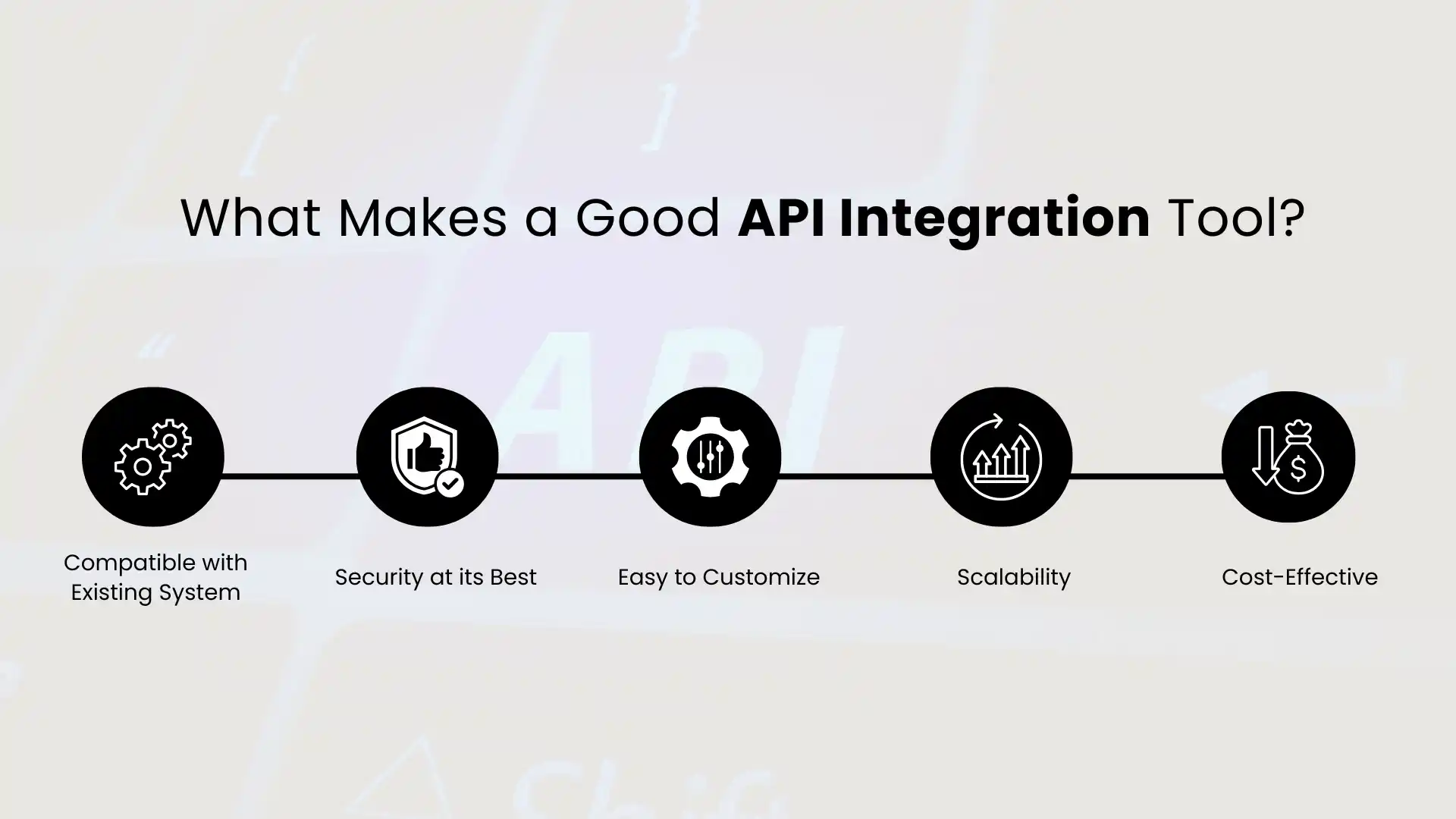
Though open API integration in e-commerce offers many benefits, it is always better to conduct thorough research when selecting the right tool. This will help you make the best practices for successful API integration. Let us see what factors to keep in mind before opting for any API integration:
We all feel easy in the company of like-minded people, and similarly, it is the case with APIs. You can make the best use of an API if it is compatible with your existing system i.e. the tech stack and software you currently use.
E-commerce operations, especially those involving financial transactions, are at high risk as they involve the exchange of sensitive data on servers. Hence, never compromise on the security parameters of an API.
Digital commerce is quite dynamic and keeps changing according to the market trends. This requires updating the functionalities to enhance the customer experience and make operations smoother. So always look for APIs that can be customized whenever you need.
WebBee Global is constantly changing the dynamics of eCommerce business at present and till now, one of the best-known eCommerce API integration tool among sellers. Developers are embedding new technologies in the APIs, which are making them more efficient and adding a new dimension of functionality each day. As a digital retailer, these API integrations are no longer a choice but a necessity, or else you might struggle to reach to top in the eCommerce space.
Want to stay ahead by integrating APIs now? WebBee can help you with the eCommerce API integration, so you can take a new step towards a successful business. Do not hesitate to contact us if you have any other queries regarding ecommerce! We will try to help you at our best.
Ques 1: Does MapMyChannel by WebBee support Open API integration in E-Commerce?
Answer: Sellers can integrate any open API with their store to enhance operations.
Ques 2: Can I use API integration for my e-commerce website?
Answer: MapMyChannel by WebBee offers a custom API solution to give you greater control.
Ques 3: How much does it take to integrate an API?
Answer: In just a few minutes, you can connect the API and start selling limitlessly.
.svg)