

Shopify Agentic Commerce Sellers Guide
WB
WebBee Team
eCommerce Specialists
Agentic commerce is a modern retail model where AI agents shop on behalf of shoppers by comparing options, researching products, and buying items automatically. The model is achieving popularity: McKinsey estimates that international agentic commerce can attain $3 trillion - $5 trillion by 2030. For sellers, this makes a new rule, to ensure that AI agents choose your product.
In this blog, you will explore what Shopify Agentic Commerce is, how it works on Shopify, which AI platforms it supports, and how sellers can ready their store for the future landscape of online shopping.
Find me waterproof hiking boots under $250 for wide feet. Prioritize comfort, durability, customer ratings, fast delivery, and an easy return policy.
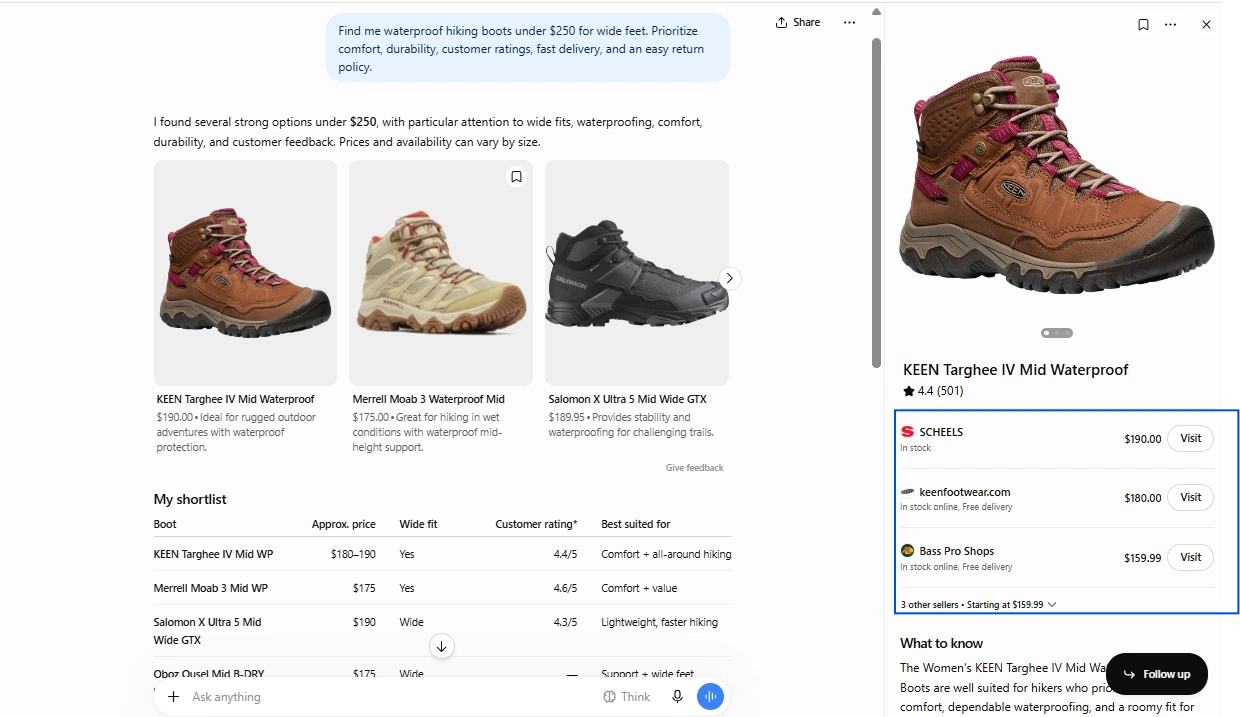
The top protocols for agentic commerce ease how AI assistants find products, handle checkouts, and manage secure payments automatically.
UCP normalizes the complete shopping journey, from product discovery to catalog browsing to final checkout. It allows AI shopping agents to engage uniformly over multiple merchant platforms without any custom integrations.
ACP focuses particularly on simplifying and implementing easy online checkout and shopping carts. It allows sellers to quickly integrate their inventory and payment gateways so AI agents can finish the purchases immediately.
AP2 offers safe and verifiable payment approval using encrypted signed digital mandates from the customer. It gives financial trust when an AI agent implements a transaction on payment networks.
MCP works as the core connection tier allowing AI models to securely access outside seller databases, product feeds, and tools. It normalizes how an agent will see the data before any commercial transactions start.
A2A determines how independent AI agents find each other, assign specialized tasks, and collaborate. It acts as a microservices to allow distinct digital agents to communicate smoothly to fulfill multiple customer requests.
It refers to a new approach of shopping in which ai agents for shopify work on a shopper's behalf all over the purchasing journey. Despite just suggesting products, these agents can predict a shopper’s requirements, make a cart, search Shopify’s product listings, compare options, initiate checkout, and offer order updates.
As AI agents take over the buying journey, it will going to benefit shoppers and sellers both in multiple ways:
_clean.webp)
Agentic commerce on Shopify is an automated shopping model where AI agents discover, compare, and buy products on a customer’s behalf.
The AI agent may discover products, suggest one, compare them, and help the customer in placing the order. This is AI discovery, and it has become a new method for shoppers to identify products. But after they decide to buy, someone still needs to work on the e-commerce operations.
Currently, Shopify agentic commerce supports four main AI channels: ChatGPT, Google AI Mode and Gemini, Microsoft Copilot, and Meta. However, product discovery and checkout work differently across these platforms.
Despite just telling each seller to choose this or that, provide them the options that match their tech stack, goals, and use case. Ask these 3 questions:
For sellers connecting Shopify with marketplaces, fulfillment providers, or ERP systems, WebBee's Shopify integrations can help sync commerce data and automate operational processes. This allows them to focus on selling via advanced AI-powered channels while their current fulfillment structure continues managing orders.
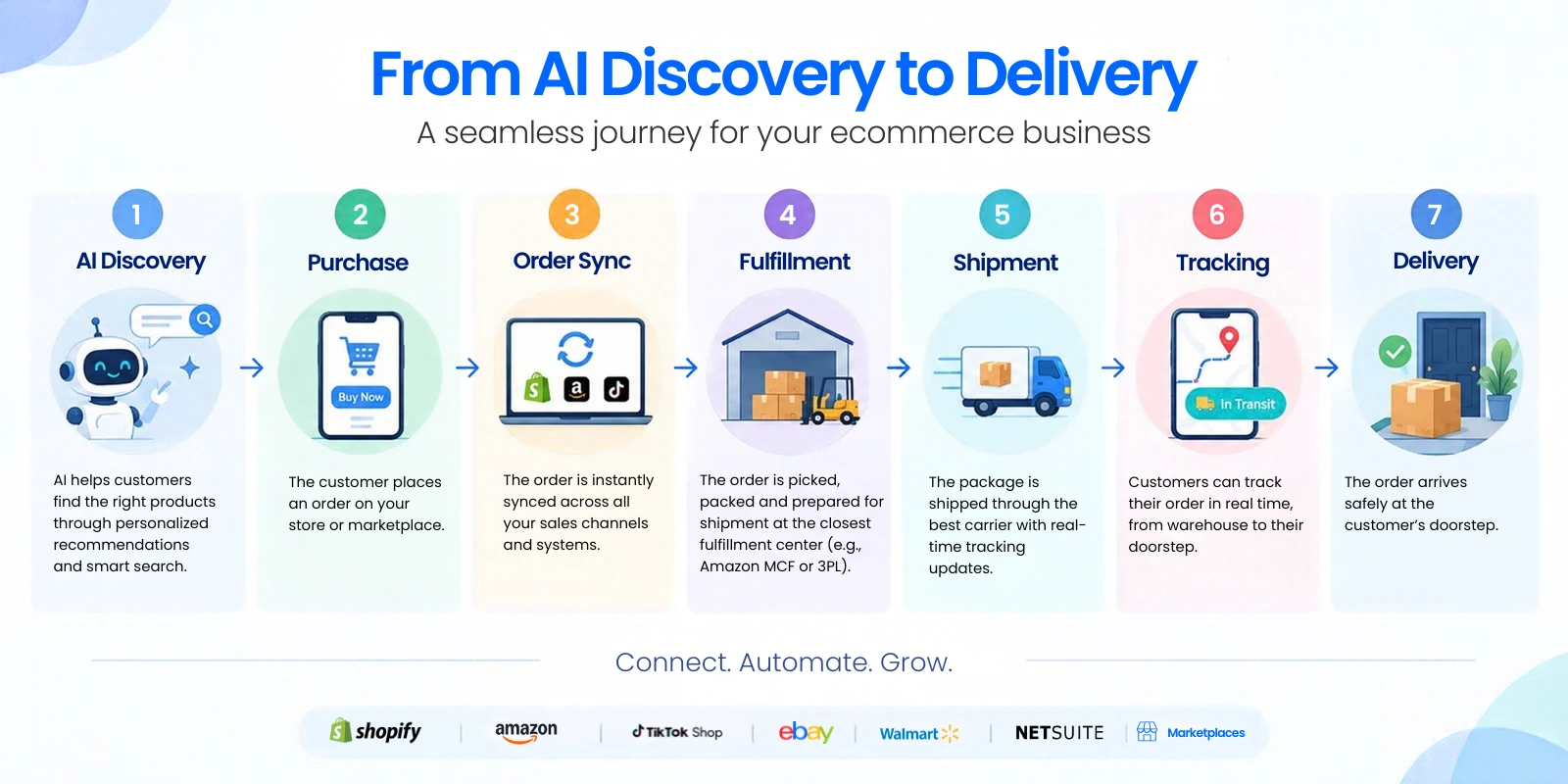
Let’s explore the steps of how to ready your store for Agentic Commerce.
In your Shopify admin, search for Sales Channels and Agentic Storefronts. Many qualified stores are on by default.
Select which AI channels you want to sell on, and turn them on or off per platform.
Complete each product field with unique, right detail so agents can match and suggest you.
Add and scale reviews on your best sellers, as agents rely on them heavily.
Keep inventory and prices precise in real time to prevent being skipped.
Use offers such as bundles, gifts, and volume discounts, and ensure they are in digital format.
Make use of the channel labels in your admin to know which AI channel is bringing more sales and what is working in your favor.
Shopify agentic commerce helps sellers to engage more customers over AI shopping channels. With complete product data, right channel settings, and clear store policies, you can ready your store for this advanced approach of selling.
No, you don’t require Shopify Plus for agentic commerce. Shopify involves Agentic Storefronts and structured listing sync over basic subscription plans.
For AI discovery, you need clear, machine-readable product data, so AI assistants can compare and suggest your catalog.
No, you don’t need a traditional Shopify online store to sell via AI, but having a centralized commerce backend such as Shopify makes it easier to connect AI sales channels.

.svg)