

Global E-commerce Challenges: Overcome Logistics, Compliance & Fulfillment
WB
WebBee Team
eCommerce Specialists
The global ecommerce market estimates are expected to cross the $1.8 trillion mark by 2030, showcasing exceptional growth prospects in the coming years. Sellers have to overcome certain challenges to tap into the opportunities presented by global selling. Especially for the small and mid-level sellers, global selling has remained a dream for years and rather decades if the challenges are not addressed and resolved for the good. This blog aims to bring enlightenment about the most common global ecommerce challenges along with the ways to overcome them using sellers oriented low-cost solutions. So, make sure to read it till the end.
First in line, let’s discuss the most common challenges faced by the ecommerce sellers during cross-border selling. Here’s a list:
Shipping beyond national borders comes with high costs involving customs, taxes, and steep shipping prices. Even if the seller is able to transport the goods to the consumer successfully, reverse logistics is very difficult and even more expensive. Getting clearance from the different nations is yet another difficult task for merchants online.
Different nations have very distinct rules, local laws and regulations; something that looks harmless in one’s home country can be lethal in some other countries. Abiding by the rules and regulations framed by different countries is not just difficult, but the slightest oversight can land the business in a major puddle.
Sellers need a really safe payment gateway that will allow them to make and receive payments for their international e-commerce. The conversion rates keep fluctuating, and the payment from different nations can definitely attract a fee for conversion. Hence, sellers refrain from going beyond domestic e-commerce.
The competition that the sellers across the globe have to face while selling their products online is highly intense. One might be king of their local market, but international markets have one better than others, making it difficult for new players to settle and attract customers. This poses one of the most prominent global selling issues, keeping sellers away from the global market.
Connecting to customers across different markets is really hard, especially when the seller is not able to understand their cultural and national preferences. Inviting customers and attracting conversions is two times harder in this case. Trust building can only be done with reviews and security.
The list mentioned above discusses overall business challenges faced by the sellers during global selling. The following are the most prominent global ecommerce fulfillment challenges:
Global selling requires accuracy and efficiency from the business’s end. When the seller employs human resources to process and ship the products of an international order, there are chances of errors and delays, which the business cannot afford. Slightest errors and delays can ruin customers’ experience, and they might never come back to the business to make a purchase.
Selling via different sales channels and marketplaces is only beneficial for the business when the seller is able to maintain the same. Without an e-commerce integration solution, sellers will face multiple issues like missed orders, lost packages, mismanaged inventory, and shipping delays. All this will ruin the brand image, hence sellers lose revenue.
When sellers start selling globally, this is one thing that must not happen. The most common reason for this issue is poor global shipping solutions. International shipping requires expertise and a network that is able to handle the responsibility of delivering the goods to the designated customer across borders. Amazon MCF for global sellers is a great choice, allowing them to flow their products seamlessly.
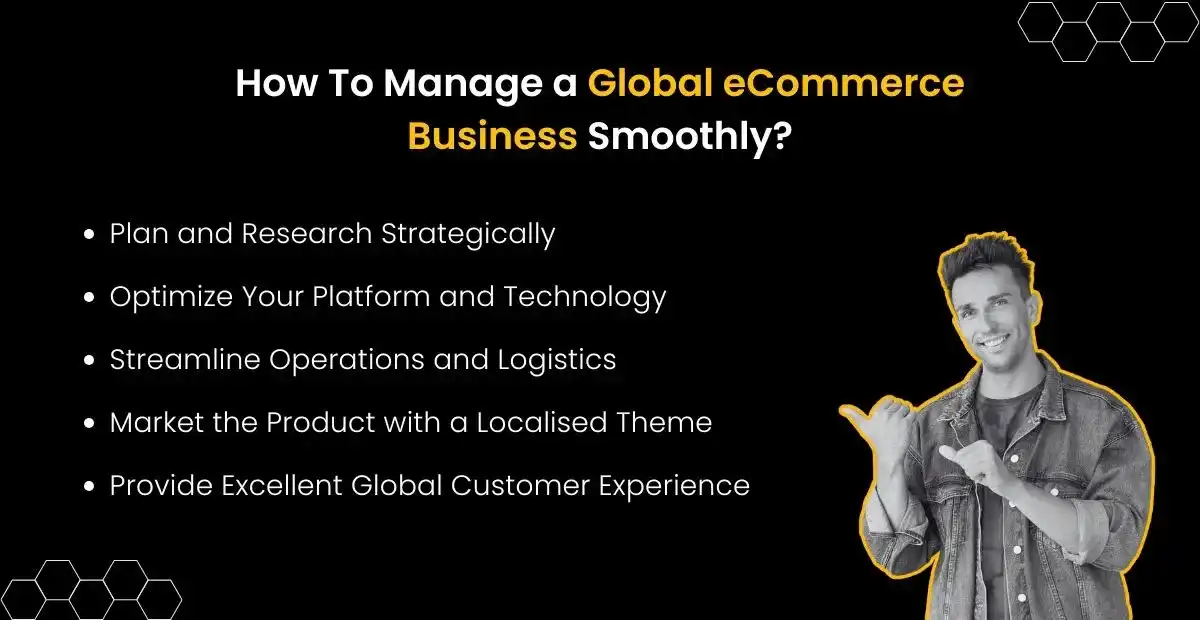
Enough discussion on problems, let's get to the part you must be waiting for. Here’s how you can overcome the problems mentioned above:
The order fulfillment process is quite long with multiple steps. When sellers opt for automation of their fulfillment process, they are able to avoid the delays and human errors, bringing smoothness to the fulfillment.
In order to manage sales from different channels smoothly, sellers need a multichannel integration system. It connects different sales channels to a centralized system. It allows sellers to manage all their orders from a unified system, preventing errors.
The SEO includes description, keywords, and the entire content line presented to the customers from the brand need to have local sentiments and cultural references. This will help the seller gain customer trust and visibility.
This is a bit tricky, but holds a high importance for sellers willing to sell globally. The prices quoted on the website need to be in the local currency so customers are not bothered with conversion. Also, the selling products need to abide by the ecommerce countries compliances through following local rules and regulations, so the business does not end up in any legal problems.
Sellers need to make sure that both buying and selling parties get notified of the order status. Transparency allows trust and avoids anxiety on both ends. It also makes the selling process simpler and highly efficient, removing complex ecommerce logistics challenges.
Special Tip: Sellers can rely on Amazon Multi-Channel Fulfillment(MCF) to overcome the operational and integration challenges. This allows smooth global ecommerce fulfillment, automatic processing, and simplified cross-border expansion.
Amazon MCF by WebBee is a smart e-commerce application specially designed to help online digital sellers willing to sell across the global marketplaces and get their orders fulfilled through Amazon MCF successfully with a simplified integration and automation tool. Here’s how it helps sellers jump right across global challenges:
Sellers can connect their seller account to multiple Amazon marketplaces. Hence, expanding globally and making e-commerce operations much simpler with Amazon MCF by WebBee in different countries.
Sellers can list as many products as they want, without any limits. They can use the integration application to import the listing from different marketplaces and hence make the process much simpler.
Amazon MCF by WebBee allows sellers to manage their inventory seamlessly across different geo-locations. Hence, situations like stockouts and dead inventory can be prevented. There is clear visibility of numbers across channels.
Different operations like prices, inventory, orders, and shipping can all be tracked in real time with the application. Hence, sellers are always aware of their business operations. This leads to better business performance.
This is one of the best features that allows the sellers to get access to the Amazon blank box facility. They can deliver their products in a blank box, with a customised label message, increasing the brand awareness.

Global selling seems daunting from afar, but the right e-commerce automation software prevents sellers and their businesses from drowning in this massive sea. Amazon MCF by WebBee application is one such software that brings a smooth flow to the business with inventory sync and order management, continuous order tracking, and notifications, multiple 3PL integrations, and a lot more. Just the right help and a little bit of courage, and your business will be pinned on the global market. So, start today and get access to the e-commerce integration application NOW!

.svg)