

2026 E-Commerce Fulfillment Playbook
WB
WebBee Team
eCommerce Specialists
E-commerce fulfillment is the most essential feature of your business. You can’t meet user expectations if your e-commerce fulfillment is not up to the mark. That’s the reason 73% of users like to buy an item with free shipping. Approx 49% users leave their shopping cart due to unexpected shipping costs. So, it doesn't matter if you have a large variety of products or have built a strong sales channel, your dedication will go to waste if you don’t have a user-friendly fulfillment process. Effective fulfillment is necessary for user satisfaction & positive feedback. So, what should you know to execute an effective e-commerce fulfillment strategy? In this blog, we will explore everything that you require to get it started. Let’s start.
It is the process of picking, packing, shipping, & delivering products to your users. But, rather than being simple on the surface, it can be a little tricky if you desire to achieve effective fulfillment & deliver items to your users easily and error-free. E-commerce fulfillment begins with inventory management, ensuring products are in stock & prepared for fulfillment when a user orders them. It is completed when the user chooses the products. So, many variables you need to consider when doing it. Partnering with a professional fulfillment provider can be helpful for businesses that:
● Desire to start selling in new markets, channels, or locations.
● Don’t own or work their own physical fulfillment centers.
● Want to develop more streamlined logistics.
● Require time to concentrate on other essential priorities.
You may find various e-commerce fulfillment methods across different channels. Let’s explore a few common methods that e-commerce businesses utilize to pack, pick, ship, & deliver orders to users.
This model enables brands to outsource it to a 3PL provider to manage the complete warehouse and logistics operations. Mainly, e-commerce businesses that want to focus on their key business processes, like marketing, product development, user service, & more, can be valuable from choosing a Third-Party Logistics (3PL).
As the name suggests, this DIY strategy requires managing every aspect of order fulfillment internally, from accepting orders to picking to packing to shipping it to users. It offers more control over the fulfillment process and enables customization.
Among the various e-commerce fulfillment choices, this method includes users getting the orders directly from the wholesaler or other origin without keeping it in a warehouse.
If you are not open to outsourcing, then this model is for you, where the seller manages order fulfillment alone. The seller picks, packs, stores goods, ships orders, and manages returns.
E-commerce fulfillment exceeds packing and picking. E-commerce sales are estimated to account for 20% of total sales, and fulfillment will play an essential role in this expansion. Effective internal e-commerce fulfillment, or the right fulfillment partner, is necessary for the seamless operation of your online store. The fulfillment process involves 4 basic components; let’s look at them.
Inventory storage is the 1st stage in e-commerce fulfillment workflows. Accepting and storing inventory also includes proof that the merchant needs to submit. This will keep things organized and smooth during the shipping process.
Inventory management is a structured process for tracking each product. It helps you determine which & how much stock to order to achieve the right inventory level. For 24% of e-commerce businesses, managing inventory is one of the 3 top challenges in e-commerce operations. Executing inventory management is essential, and it accompanies storage in the environment. Add SKUs to your items to resolve any uncertainty.
Order fulfillment is the commitment of each e-commerce company. It consists of the following elements:
● Picking
It is the 1st step in order fulfillment. To do this, you have to look up the products the user has ordered in your warehouse. Orders may involve items from one location or multiple locations. If you have bulk orders, it is recommended to hire experienced employees to expedite fulfillment.
● Packing
When shipping orders, you should pack each product with care. Your packaging must showcase your brand picture. Also, comply with the policies of courier companies.
● Shipping
Pick a delivery service that will bring your product to the courier center. Be ready for on-time shipping to avoid delays in the 1st & last fulfillment processes.
Handling returns or reverse logistics is the final step in the e-commerce fulfillment process. When you manage returns, you can offer returns, & your inventory is ready to sell again quickly.
It’s perfect for eCommerce sellers to concentrate on their key business operations. But your other work might suffer if you handle the shipping requirements yourself. Here are a few perks of outsourcing to a fulfillment company.
When scaling your business, it's easy to forget to hire more staff to fulfill & dispatch your orders. Hiring employees can take a lot of time, and managing them is even more time-consuming. So, if you outsource your fulfillment, you don’t have to hire employees to fulfill your orders.
Many fulfillment firms provide flexible pricing. If you are going through a downtime, they can make changes as needed.
You know that handling a company is time-consuming & even more challenging than you expected. So, outsourcing your fulfillment services will make the process easy & you can focus on your key activities.
By outsourcing e-commerce fulfillment, they will handle everything when user demand fluctuates. You can calm down and take advantage of the additional seasonal sales.
Choosing an e-commerce fulfillment partner will help you reduce costs & scale your e-commerce business faster in 2026.
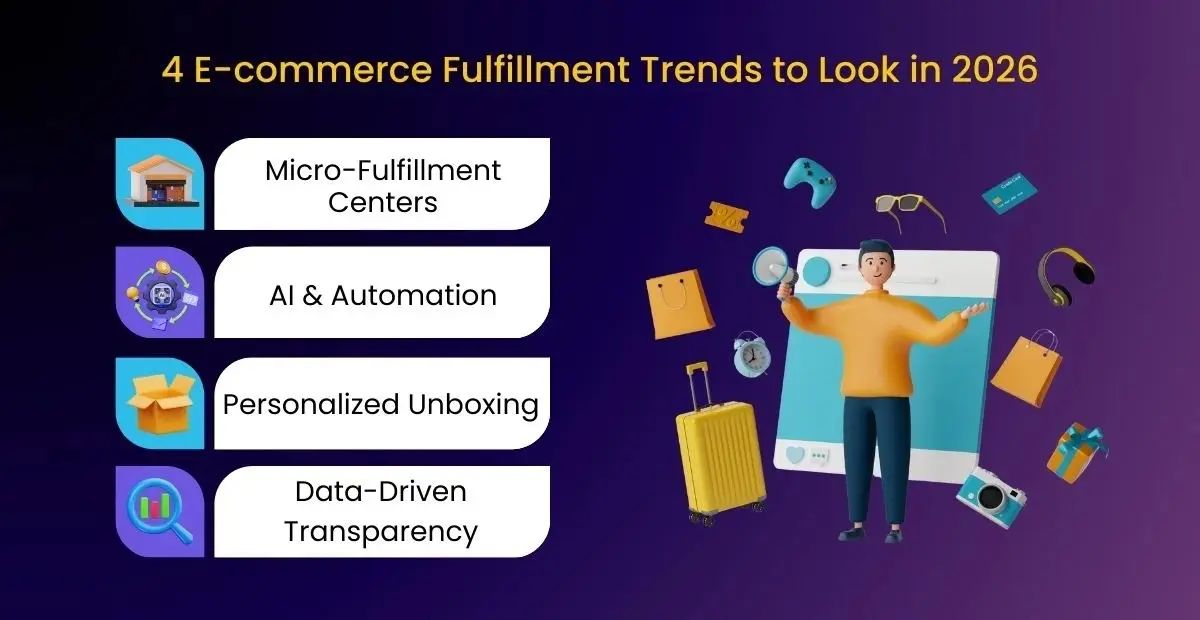
At WebBee, we want to support you with multi-platform fulfillment by selling your products on Amazon, Shopify, TikTok, eBay, Walmart, and more. Our Amazon MCF app lets you seamlessly integrate multiple platforms into a single dashboard. So, it will incorporate & update data across all platforms, allowing you to showcase accurate inventory levels across every channel. You only need a little help, and you can take your business to a global level with Inventory Management Systems (IMS).
Your e-commerce fulfillment workflow grasps the keys to your business success. But there are various aspects to providing an extraordinary user experience by improving your latest fulfillment process. So, faster and on-time deliveries are strong ways to enhance user satisfaction and retention. By choosing a reliable partner like WebBee integrations, you can transform your e-commerce journey so that everything works in your favor, effortlessly and efficiently.
.svg)