

Customs Duty €3 & France's Fast-Fashion Law: What Sellers Must Know (2026)
WB
WebBee Team
eCommerce Specialists
The EU €3 parcel fee on low-value imports takes effect on July 1, 2026 until 1 July 2028. The measure applies to low-value consignments up to €150 imported from outside the EU, directly impacting cross-border marketplace models used by AliExpress, Temu, Amazon , SHEIN, Haul-style sellers & other non-EU e-commerce vendors.
From 1 July 2026, the EU will use a temporary €3 customs duty per item on low-value consignments up to €150 imported from the external EU, canceling the duty exemption applicable until 30 June 2026. The €3 temporary customs duty is a flat fee, which will apply until 1 July 2028, after which normal customs duties will apply, based on the kind of goods.
France postponed its national €2 parcel tax to prevent double taxation & align with a new European Union-wide customs duty. As, EU launched a wider €3 fee on low-value non-EU parcels to inhibit ultra-fast fashion imports, keeping the French fee unjustifiable .
The EU duty is €3 per product type, and is crafted to make a more level playing field for European retailers by compensating the low prices and huge volume of products from overseas platforms such as Shein, Temu, & AliExpress.
The duty applies per item in a consignment, based on tariff classification (not quantity). Explanatory example highlighting how it will operate in practice:
€3 temporary customs duty (from 1 July 2026): is a fixed duty applied per item (not per parcel) for consignments with a value up to €150. It will apply until 1 July 2028, when the EU Customs Data Hub for e-commerce will be operational. Proposed Union handling fee (amount and date of application in autumn 2026 to be determined): is a fee & not a customs duty. Its objective is to cover customs processing costs.
The Senate adopted without amendment on Monday, June 29, a law regulating France fast-fashion law 2026: a ban on advertising for the most polluting brands & progressive penalties. France is becoming an innovator in this region, taking on industry leaders such as Shein & Temu, rather than a considerable debate.
Ultra-fast fashion or ultra-express fashion are the online retailers' brand communities that add thousands of new & low cost value products online daily or sell clothing at cheaper prices with affordable replacement. When clothes are this cheap, buyers replace them instead of repairing them. New France law uses these two factors to identify the businesses that are using these marketing strategies & techniques. For now this law is mainly targeting the marketplace Shein, Temu, and AliExpress.
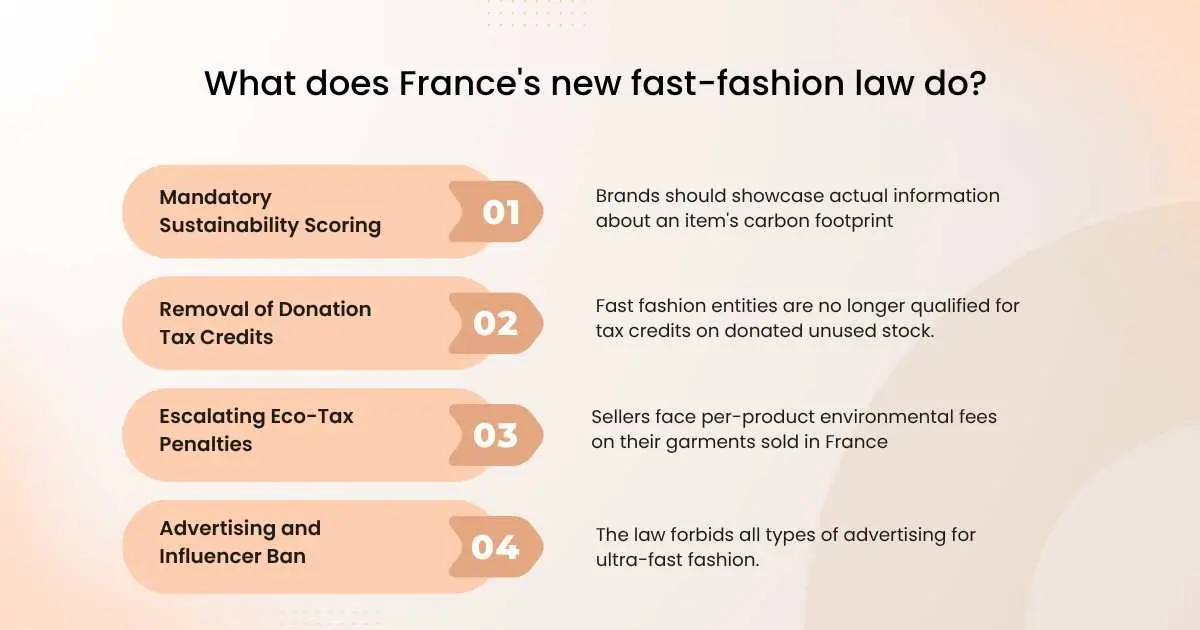
After more than 2 years working its way via legislative channels, France finally fostered its much-anticipated ultra-fast fashion law France bill on Monday. The law is one of the most driven regulatory moves yet against ultra-low-cost, high-volume online clothing platforms like Shein, Temu & AliExpress.
These regulatory moves are entirely changing the environment for cross-border e-commerce, compelling platforms such as Amazon & Shopify to enforce rigid policies to prevent huge platform-level penalties.
Read the full guide: How Auto Multi-Channel Fulfillment Works for Shopify Sellers.
These rule definitely impact for seller shipping in EU. The non EU sellers facing €3 customs duty per item starting from July1 2026- it's cover all seller regardless of what size of your businesses you have. On the other side of France Fast Fashion Law hitting hard for higher per item fees with an advertising ban. Here are sellers to do list for now:
France passed its landmark anti-fast-fashion law on June 29, 2026.
France’s leading anti-fast-fashion law mainly targets "ultra-fast fashion" platforms such as Shein, Ali Express, and Temu.
Yes, France cancelled its national €2 parcel levy, but it has been replaced by broader EU fees.

.svg)